Source Anodized Silver LED Driver for commercial, industrial, and residential lighting
Find 30 Anodized Silver LED Driver options from verified Chinese manufacturers. Compare specifications like output power, input voltage, and certifications to select the right unit for your lighting project needs.
Key considerations
Products List






China OEM Factory Slim LED Driver for Indoor Lighting with a 3-Year Warranty
$5.00 - $9.00
MOQ: 100 pcs
Comprehensive Sourcing Guide
Strategic Sourcing Guide for Anodized Silver LED Drivers
Understanding the Product Category and Core Specifications
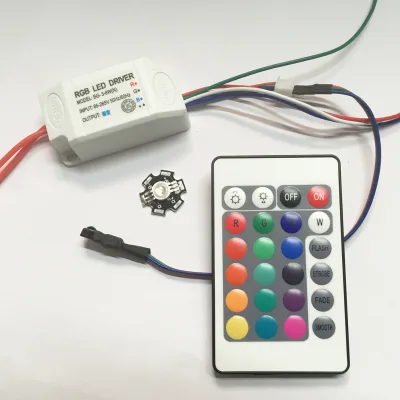
When sourcing an Anodized Silver LED Driver, buyers must first distinguish between the cosmetic finish and the underlying electrical architecture. The term "anodized silver" typically refers to the aluminum housing finish, which provides corrosion resistance and aids in thermal dissipation, a critical factor for high-power applications. However, the supplied product data reveals a diverse range of configurations under this search term, including units described as "RGB driver + LED chip" and standard "led driver" models. This indicates that the market offers both integrated solutions and discrete drivers.
The physical dimensions of these components vary significantly based on their intended power output. Observed specifications include a standard size of 261.5mm in length by 57mm in width and 35mm in height, while other models feature compact dimensions of 82mm by 36mm by 24mm. Some listings indicate "Customized" sizing, suggesting that manufacturers can alter the footprint to fit specific luminaire designs. The material composition is predominantly plastic for certain low-power variants, though the "anodized silver" descriptor implies an aluminum chassis for others to ensure heat management. The product weight ranges from 50g to 0.1kg, reflecting the density of the internal components and the housing material.
Electrical performance is equally variable. The input voltage requirements generally align with global standards, with specific models supporting 220V single-phase input, while others accommodate a broader range of 100-240VAC at 50/60Hz. The output power capabilities span from low-power 6W or 12W maximum units to high-capacity drivers capable of 8-120W. Output current specifications are equally diverse, with some units rated for 30A, while others provide a variable range of 100mA to 2000mA. The output voltage is frequently observed in the 6-48V range, suitable for various LED string configurations. Understanding these variances is essential before narrowing down a supplier list, as a mismatch in voltage or current capacity can lead to system failure.
Technical Architecture and Performance Metrics
The internal circuitry of an LED driver dictates its efficiency, lifespan, and compatibility with lighting control systems. A primary observation in the supplied data is the prevalence of PWM (Pulse Width Modulation) modulation systems. This driving method allows for precise control of brightness and color mixing, particularly in RGB applications. The circuit structure is often described as "PWM Controlled," ensuring stable current delivery to the LED chips. The driving method is consistently identified as "LED Constant Current," which is the industry standard for maintaining consistent light output and preventing thermal runaway in LED arrays.
For applications requiring dimming capabilities, buyers should verify if the driver supports dimming functions. The data confirms that "Yes" is a supported attribute for dimming, and the "In-Out" configuration is often a "Step-down Type," meaning the driver reduces the input voltage to a level suitable for the LEDs. The color rendering index (CRI) is a critical metric for lighting quality; observed values indicate a CRI of 80, which is suitable for general commercial and residential lighting but may require higher specifications for specialized retail or museum applications.
Longevity is another key technical consideration. The supplied facts mention a "Life" expectancy of 3-5 years as an alternative, while other high-reliability models cite a Mean Time Between Failures (MTBF) of 100,000 hours minimum at full load and 25°C ambient temperature. Working hours are also listed as 20,000, which serves as a baseline for operational durability. These figures should be treated as specific product observations rather than universal guarantees. Buyers must verify the thermal management design, as the anodized silver finish is intended to facilitate heat transfer, but the internal component quality ultimately determines whether the driver achieves the claimed 100,000-hour MTBF.
Compliance, Certification, and Regulatory Standards
Navigating the regulatory landscape is a non-negotiable aspect of B2B procurement. The supplied product data lists a robust array of certifications, including CCC, ISO, RoHS, UL, CE, TUV, and TUV-GS CB. These certifications indicate that the manufacturer has undergone testing for safety, electromagnetic compatibility, and environmental compliance. The presence of "CCC" (China Compulsory Certification) is relevant for products sold within China, while "UL" and "CE" are critical for markets in North America and the European Union, respectively.
However, buyers must exercise caution regarding the interpretation of these certifications. The data includes both high-confidence facts and low-confidence background information. For instance, while "CE" and "RoHS" are listed, they appear in a section marked as low-confidence background. This suggests that while the manufacturer may claim compliance, the specific documentation or test reports for a particular batch may need independent verification. The "TUV-GS CB" certification is a strong indicator of international safety compliance, often facilitating entry into multiple markets.
When evaluating a supplier, procurement teams should request valid, up-to-date certificates for the specific model number being purchased. It is not sufficient to rely on a general statement that a factory is "certified." The specific model, such as "qd001" or "YSL12," must be covered by the certification scope. Additionally, the "Customization" attribute is available, which implies that modifications to the driver's design might alter its certification status. Any custom engineering, such as changing the housing material or internal components, requires re-testing and recertification to ensure continued compliance with local regulations.
Cost Drivers and Pricing Dynamics
The pricing for anodized silver LED drivers is influenced by a complex interplay of technical specifications, order volume, and customization requirements. The observed price range in the market spans from $0.45 to $500 USD. This wide disparity reflects the difference between low-power, generic drivers and high-performance, customized units with advanced features like wide input voltage ranges or high power outputs.
Minimum Order Quantity (MOQ) is a significant factor in the total cost of ownership. The data shows an MOQ range from 1 piece to 500 pieces. Some suppliers offer an MOQ of just 1 PCS, which is ideal for prototyping or small-scale projects, while others require 10 pcs or more. Higher order volumes typically unlock lower unit prices, but the buyer must balance this against inventory holding costs. The "Customization" availability is a major cost driver; OEM/ODM services, which include custom branding, specific dimensions, or tailored electrical outputs, will invariably carry a premium over standard off-the-shelf models.
Packaging and logistics also impact the final landed cost. The observed packing methods include "Air Transport Packaging," "Inner PE Bag+White Box+Outer Carton," and bulk cartons containing 100 pieces. The choice of packaging affects shipping efficiency and the risk of damage during transit. For international buyers, the origin location—specifically Guangdong or Zhejiang in China—plays a role in freight costs and lead times. While the data does not provide specific lead times, the complexity of the customization and the current production load of the supplier will determine the delivery schedule. Buyers should request a detailed breakdown of costs, separating the unit price, tooling fees (if applicable), and shipping charges to understand the true economic value of the procurement.
Typical Applications and Usage Scenarios
The versatility of anodized silver LED drivers allows them to serve a wide array of applications, from general illumination to specialized lighting solutions. The "Usage" attribute is broadly listed as "Light," but the specific electrical characteristics point to distinct use cases. Drivers with an output power of 8-120W and constant current output are well-suited for high-bay industrial lighting, street lighting, and large commercial fixtures where high luminous flux is required. The 20,000 working hours and 100,000-hour MTBF ratings make these units ideal for installations where maintenance access is difficult, such as high ceilings or outdoor environments.
For applications requiring color control, the "RGB driver + LED chip" configuration is specifically designed for dynamic lighting systems. These drivers support PWM modulation, enabling smooth color transitions and dimming effects. This makes them perfect for architectural lighting, stage lighting, and entertainment venues where ambiance is a key design element. The "Lighting and circuitry design" service offered by suppliers indicates that they can provide support for integrating the driver into complex lighting systems, ensuring that the electrical design matches the thermal and optical requirements of the final product.
The "Step-down Type" circuit structure and 6-48V output voltage range make these drivers highly adaptable for various LED string configurations. They can be used in recessed downlights, linear fixtures, and panel lights. The "Customized" size option allows for integration into tight spaces where standard form factors would not fit. Buyers should consider the specific thermal environment of their application; while the anodized silver finish aids in heat dissipation, the ambient temperature and airflow around the driver must be factored into the system design to ensure the driver operates within its safe temperature range and achieves its rated lifespan.
Supplier Evaluation and Quality Assurance
Selecting the right supplier requires a rigorous evaluation process that goes beyond price and basic specifications. The supplied data highlights several key attributes that should be part of the supplier vetting checklist. First, verify the "Service" capabilities, specifically the ability to provide OEM/ODM services. This indicates the supplier's flexibility and capacity to adapt to the buyer's specific needs. Second, examine the "Product Origin" and "Place of Origin." The data points to Guangdong and Zhejiang, China, which are major manufacturing hubs. While these regions offer competitive pricing and supply chain efficiency, buyers should conduct on-site audits or request third-party inspection reports to ensure manufacturing quality standards are met.
Quality control is paramount. The "Certification" list includes rigorous standards like UL and TUV, but buyers must verify that these certifications are active and applicable to the specific batch of goods. Requesting test reports for the specific model number, such as "qd001" or "YSL12," is essential. These reports should cover electrical safety, electromagnetic compatibility (EMC), and performance under varying load conditions. The "Life" and "MTBF" claims should be backed by statistical data or third-party testing results.
The "Packing" specifications also serve as a proxy for quality control. A supplier that uses "Inner PE Bag+White Box+Outer Carton" demonstrates attention to detail in protecting the product during transit. Conversely, a lack of standardized packaging may indicate a less mature manufacturing process. Buyers should also assess the supplier's response to the "Customization" requests. A capable supplier will provide clear timelines and technical support for custom designs, ensuring that the final product meets all performance and safety requirements. Finally, the "Warranty Year" of 2 years is a standard benchmark; buyers should negotiate warranty terms that align with the expected lifespan of the product and the criticality of the application.
Long-Term Procurement and Lifecycle Management
Sourcing anodized silver LED drivers is not merely a transactional event but a strategic decision that impacts the long-term reliability of the lighting system. The "Working Hours" and "Life" expectations of 3-5 years or 20,000 hours set a baseline for maintenance planning. However, the "MTBF" of 100,000 hours suggests that with proper thermal management and operating conditions, the drivers can last significantly longer. Buyers should factor in the potential for component aging and the need for spare parts.
The "Customization" availability offers a path to future-proofing the procurement strategy. By working with suppliers who offer design support, buyers can ensure that the drivers remain compatible with evolving LED technologies and control systems. This is particularly important in the context of smart lighting, where drivers may need to integrate with IoT platforms or advanced dimming protocols. The "Lighting and circuitry design" service can be leveraged to optimize the system for energy efficiency and longevity.
Supply chain resilience is another critical consideration. The "MOQ" flexibility allows buyers to scale their orders up or down based on market demand without being locked into large inventory commitments. However, for long-term projects, establishing a stable supply relationship with a supplier who can guarantee consistent quality and timely delivery is essential. Buyers should monitor the supplier's adherence to the "Certification" standards over time, as regulatory requirements can change. Regular audits and performance reviews will help ensure that the procurement strategy remains aligned with the project's long-term goals. By focusing on technical compatibility, regulatory compliance, and supplier reliability, buyers can secure a sustainable supply of high-quality anodized silver LED drivers that meet the demands of modern lighting applications.
FAQs
What certifications are available for anodized silver led drivers?
Available certifications include CCC, ISO, RoHS, UL, CE, TUV, and TUV-GS CB. Buyers must verify that these certificates apply to the specific model number like qd001 or YSL12 before purchase.
How long does an Anodized Silver LED Driver typically last?
Some models offer a lifespan of 3-5 years, while high-reliability units provide a minimum MTBF of 100,000 hours at full load. Working hours are often rated at 20,000 for standard operation.
Can anodized silver led drivers support dimming functions?
Yes, many models support dimming capabilities using PWM modulation systems. This allows for precise brightness control and is suitable for applications requiring color mixing or variable light output.
What is the minimum order quantity for anodized silver led drivers?
Minimum order quantities range from 1 piece to 500 pieces depending on the supplier. Some vendors offer low MOQs for prototyping, while others require higher volumes for standard pricing tiers.
Which output power ranges are available for anodized silver led drivers?
Output power capabilities span from 6W or 12W maximum for low-power units up to 8-120W for high-capacity models. Select the correct range based on your specific LED array requirements.
Where are anodized silver led drivers typically manufactured?
These drivers are primarily manufactured in Guangdong and Zhejiang, China. Buyers should verify the specific place of origin for each supplier to ensure logistics compatibility and quality standards.